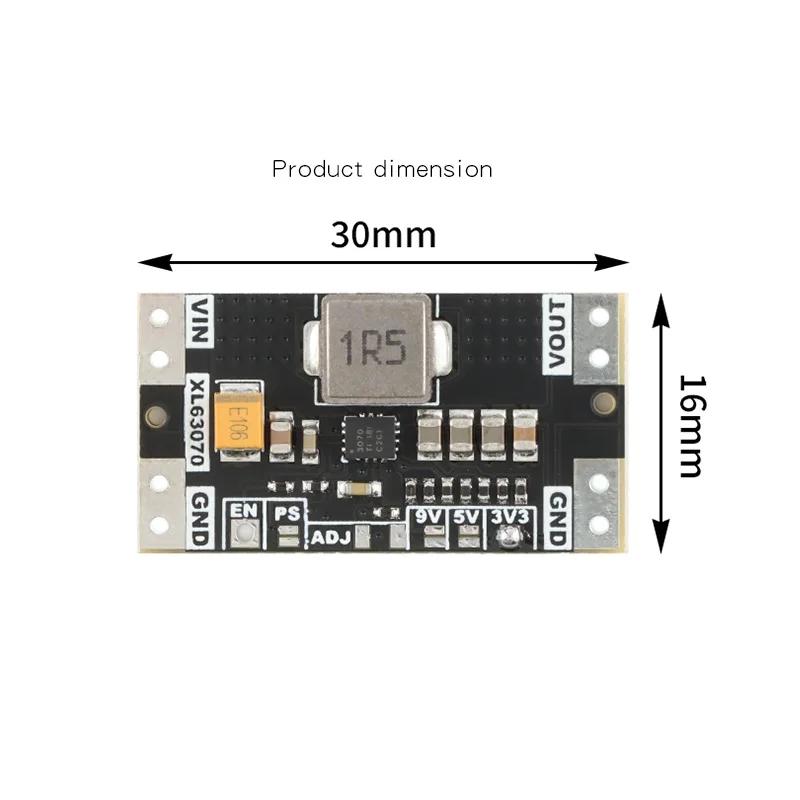

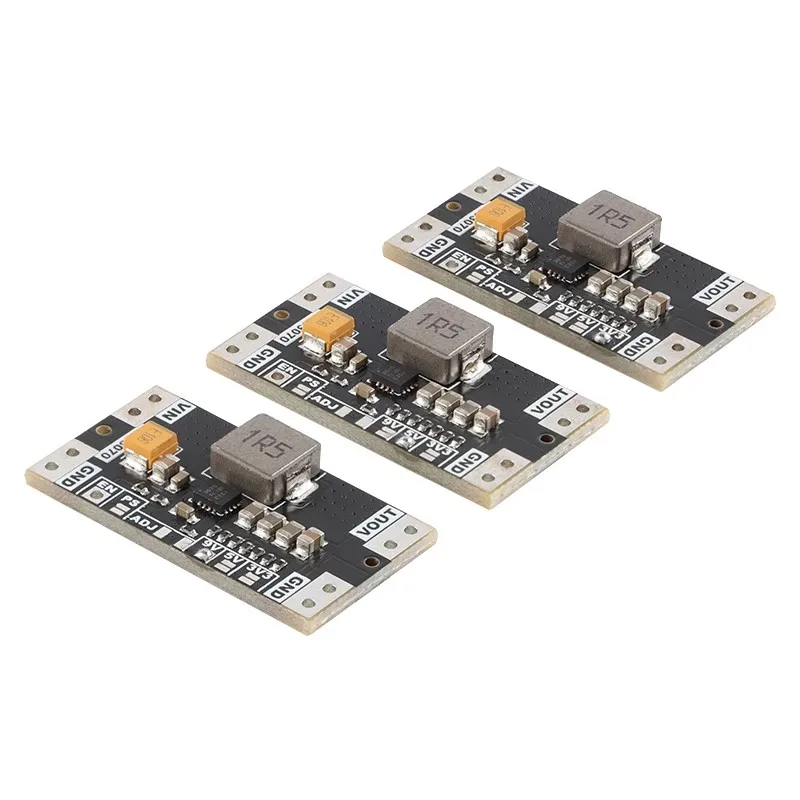
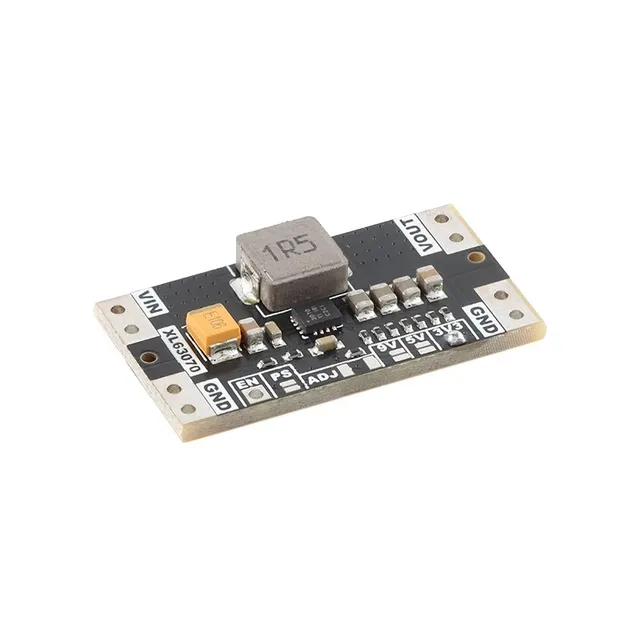
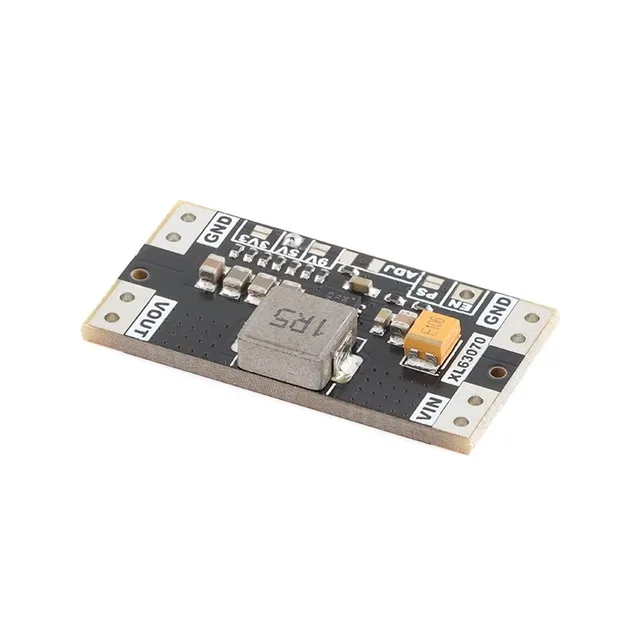


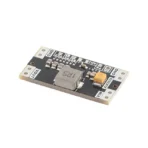
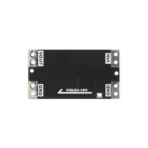
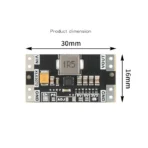
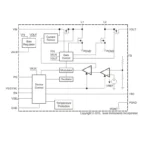

This module uses TI’s TPS63070 power chip program, stable performance, small ripple, with a maximum of 2A current output capacity, the module has a PWM mode as well as PFM power-saving mode of the two modes of operation can be adjusted by the user (the default PWM mode of delivery, the need for PFM power-saving mode of the user can be switched on their own). The module is designed with three fixed voltage outputs, respectively 3.3V, 5V, 9V, and leave ADJ pads for users to weld different resistors to change the output voltage.
As low as 2.0V working voltage, can be applied in some small voltage boost to 3.3V, 5V and other common voltage to the rear sensor power supply scenarios, can also be used as a carp battery boost to the 9V multimeter power supply, the module’s maximum output of 2A current, the module should pay attention to the module’s heating in the application of high-current, and according to the actual situation to the module to increase the heat dissipation. If not specified, the following parameters are tested in PWM mode (recommended operating mode).
- Module Type: DC Auto Liftoff Power Supply
- Start-up voltage: 2.8V (after start-up, the module can output normally within 2V-9V input voltage)
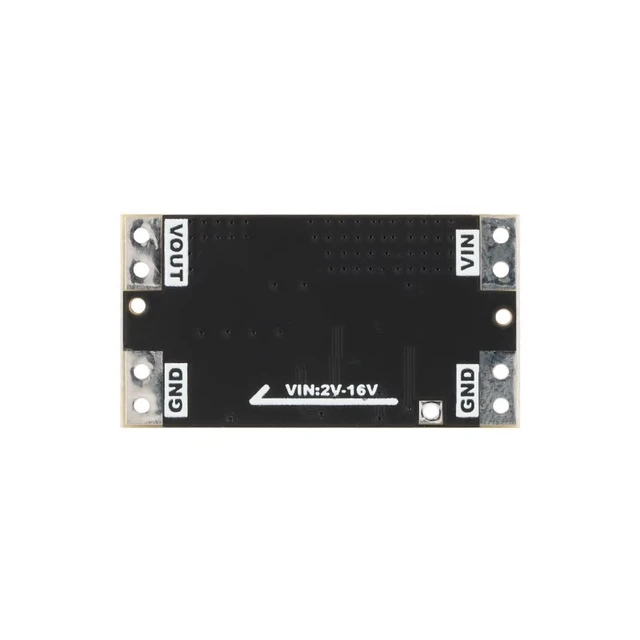
- Input Voltage: 2V- 16V
- Output Voltage: 2.5V- 9V
- Output current: 2A (MAX), refer to the picture for MAX current under different voltage.
- Operating Mode: PWM/PFM
- Output Ripple: 10mV (9V), 8mV (5V), 8mV (3.3V)
- Adjustment: Jumper pad selection
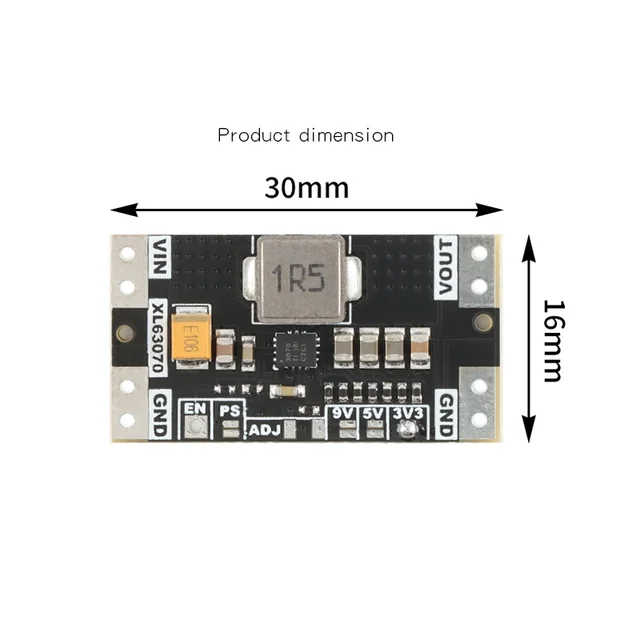
- VIN: Power Input Positive (2V-16V)
- GND: Power input/output negative
- VOUT: power output positive
- EN: Enable control (default enable, pull pin down to disable)
- PS: mode configuration, default PWM mode, short pad for PFM mode
- 3.3V/5V/9V: Output Voltage Selection
- ADJ: Output Voltage Configuration, user configure the resistor to adjust the output voltage.
Note: Output voltage selection can only short one jumper pad, not multiple pads at the same time.
Output voltage selection can only be shorted to one jumper pad, not multiple pads at the same time, and the three pads and the ADJ resistor can only be selected to work in one way.
ADJ configuration resistor formula: ADJ = (15000*VOUT)/0.8-15000
About the output:
1. The module is an auto-lift module, which can be used under the input voltage condition of 2V-16V, and the output is 2.5V-9V. The module has three fixed voltage outputs of 3.3V, 5V, 9V, and a pad that can be configured to change the output voltage.
Recommendations for use:
Module MAX output current is 2A, commonly used parameters under the output MAX output current recommendations.
(natural heat dissipation under the conditions of long-distance running is recommended to control the heat power at 0.5w or so is more appropriate)
Note: 1. Prohibit hot plugging and unplugging.
1. Prohibit hot plugging and unplugging, when the module is in use, first connect the input GND, VIN output VOUTGND and then turn on the power supply, it is prohibited to connect the load and then connect the power supply that has been turned on, it is easy to spark and burn the module.
2. Regarding the use of EN port, EN port module default pull-up, that is, the enabling state, if you need to disable, connect EN to GND for the shutdown mode, EN pulled down after the module has no output.
3. The output of the module can not be directly connected to inductive loads (such as motor products).
4. Do not connect the positive and negative poles inversely, it will burn out.
5. Output voltage selection jumper pads can only be welded to a line, if you want to switch the output voltage line to the original output voltage jumper pads on the tin removed to ensure that the jumper pads on the two small pads are not connected, and then welded to the jumper pads of the other voltage selection.
6. Default ADJ pad reserved for customers who need to calculate the resistance value according to the formula for welding.
7. No backflow prevention, no short protection.
8. In order to avoid customers touching the module circuitry due to static electricity and other reasons leading to chip burnout, so should try to avoid the module in the power on the hands touching the chip near the circuit.