

Product Highlights:
1. Premium materials ensure quality assurance
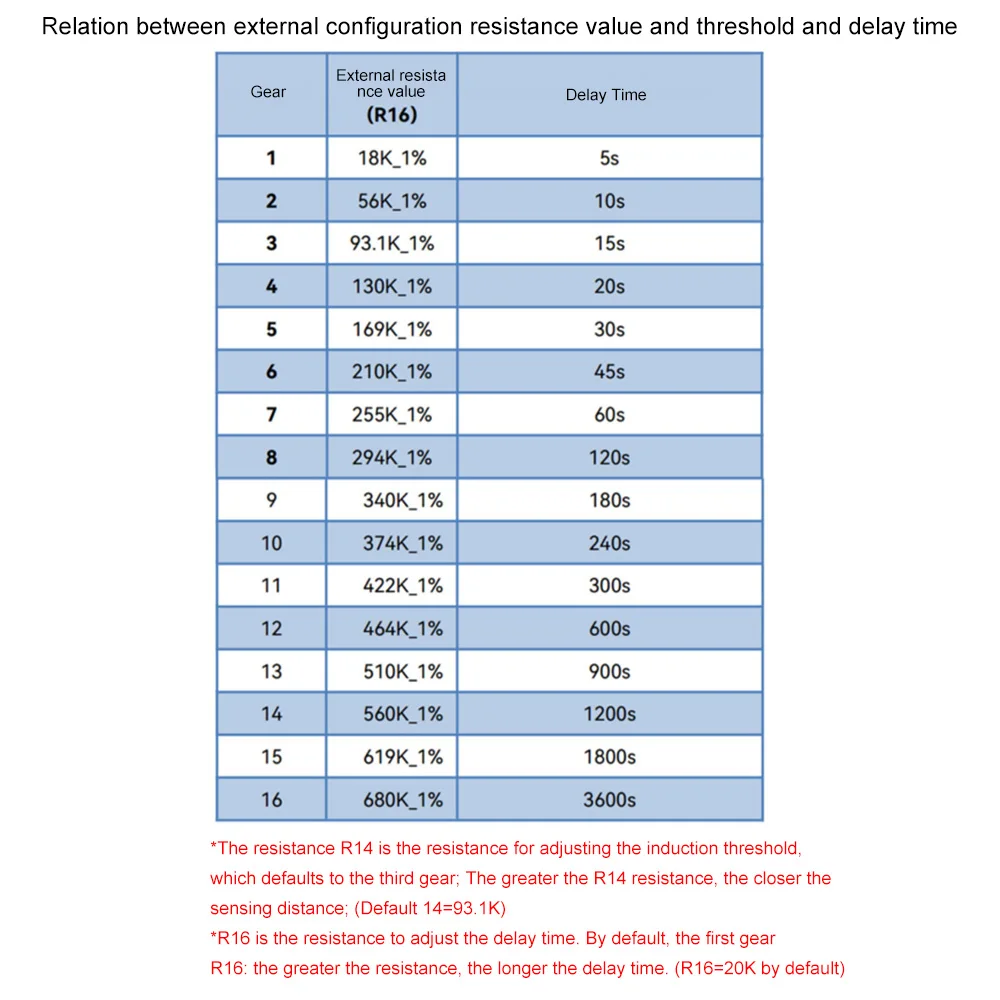
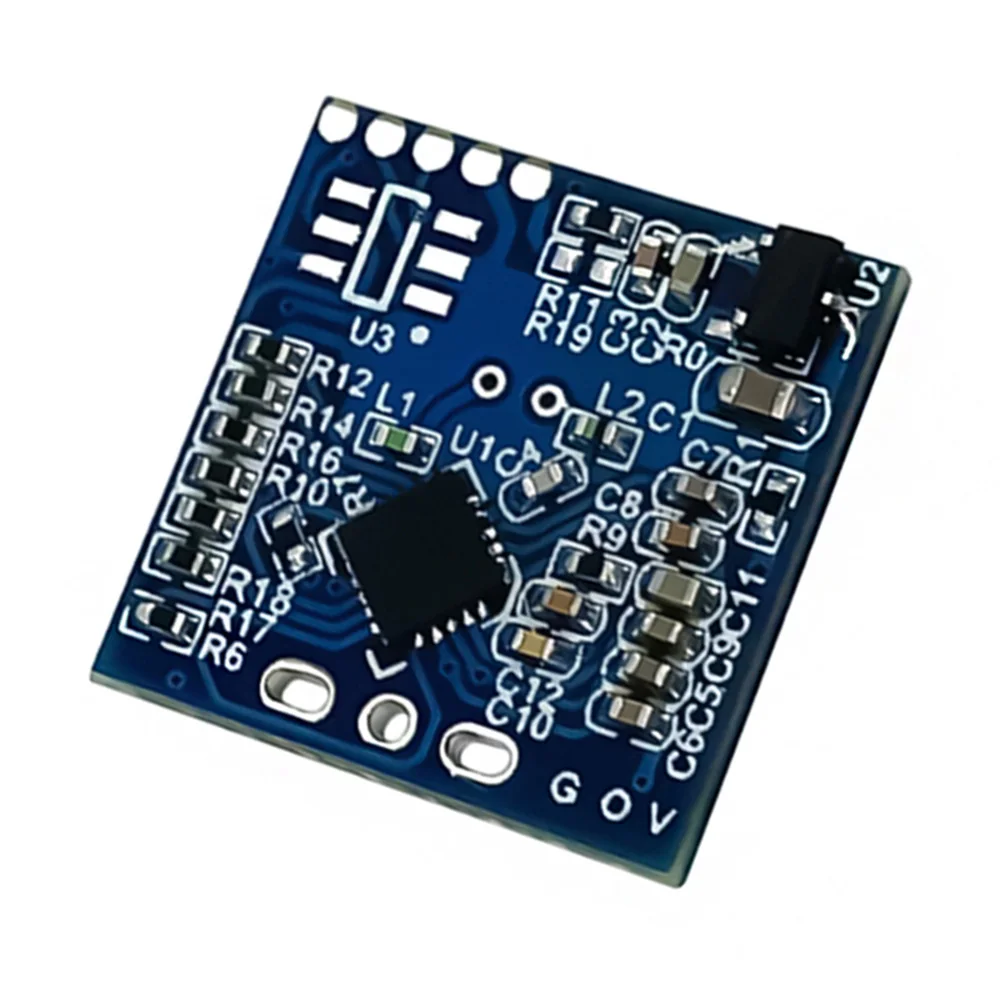
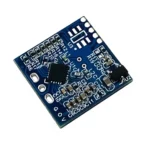
2. Low-power micro/motion sensing module based on X-band radar chip design, center frequency 1.025 GHz. Features fixed-frequency, directional transmit/receive antennas (1T1R), integrated IF demodulation, signal amplification, and digital processing. Supports adjustable delay settings for parameter customization. Offers advantages including non-penetrating wall detection, interference resistance, compact size, effective spurious/harmonic suppression, high stability, and consistency.
3. On-chip integrated algorithms directly output detection results, eliminating the need for external microcontrollers. In pulse-powered mode, the module consumes microampere-level power, targeting low-cost, low-power applications.
4. Embedded installation resists temperature/humidity, grease fumes, and water mist, enabling use in various lighting fixtures like bulb lamps, downlights, and ceiling lights. Suitable for low-power scenarios such as video doorbells, peepholes, door locks, and low-power cameras.
5. Extensive application scope
Parameters:
Operating Frequency: 10.525GHz (10.40~10.65GHz)
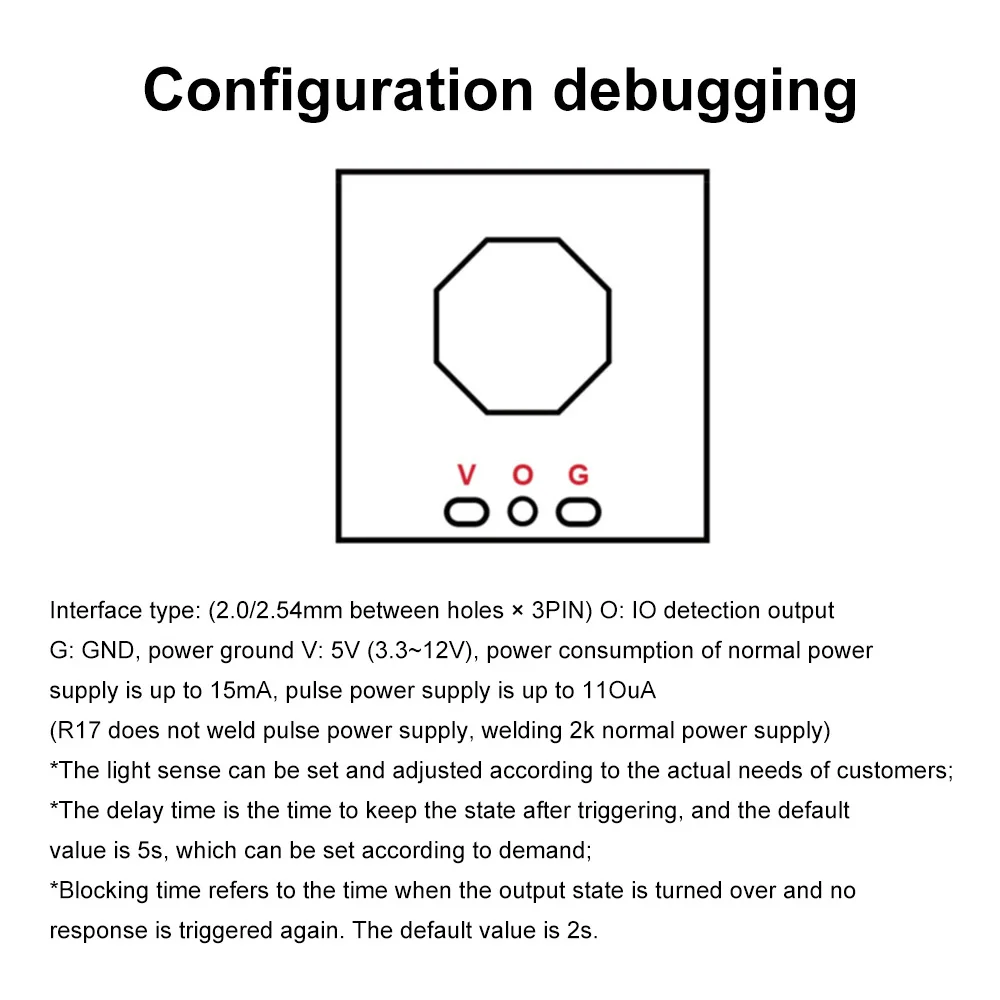
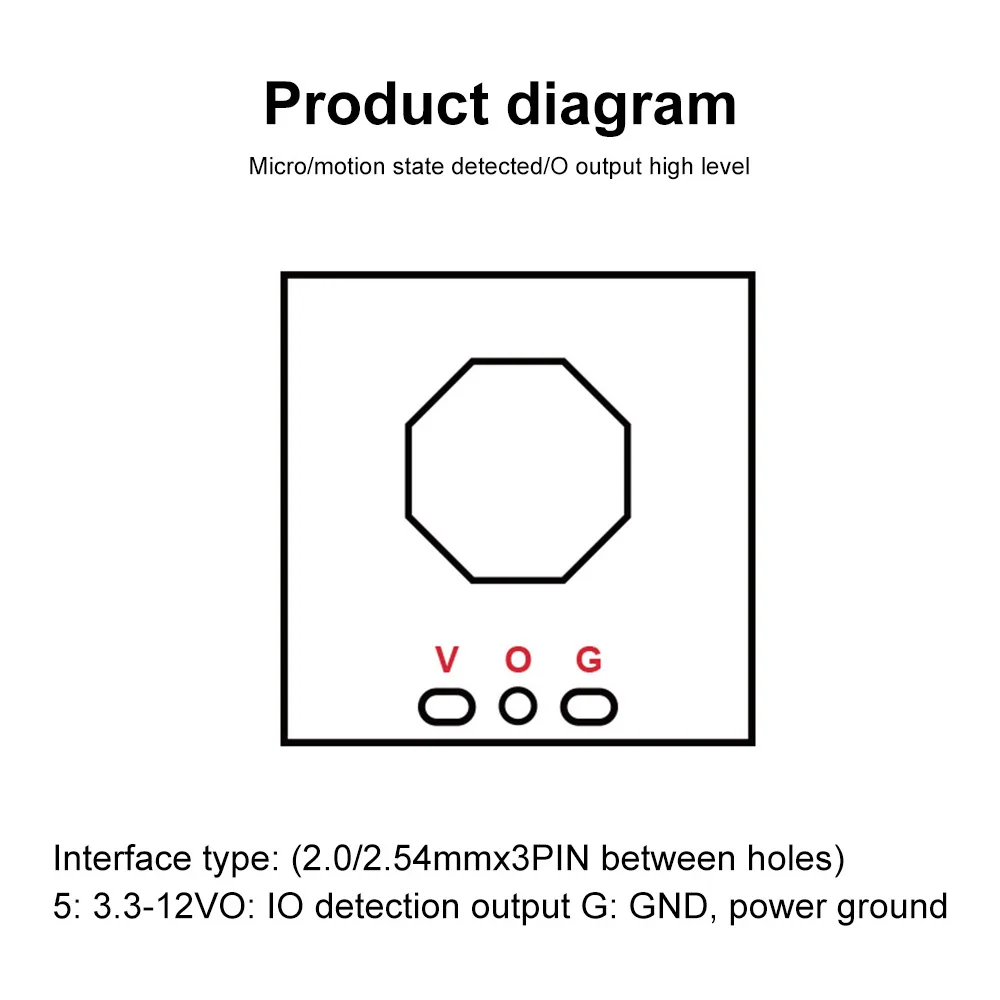
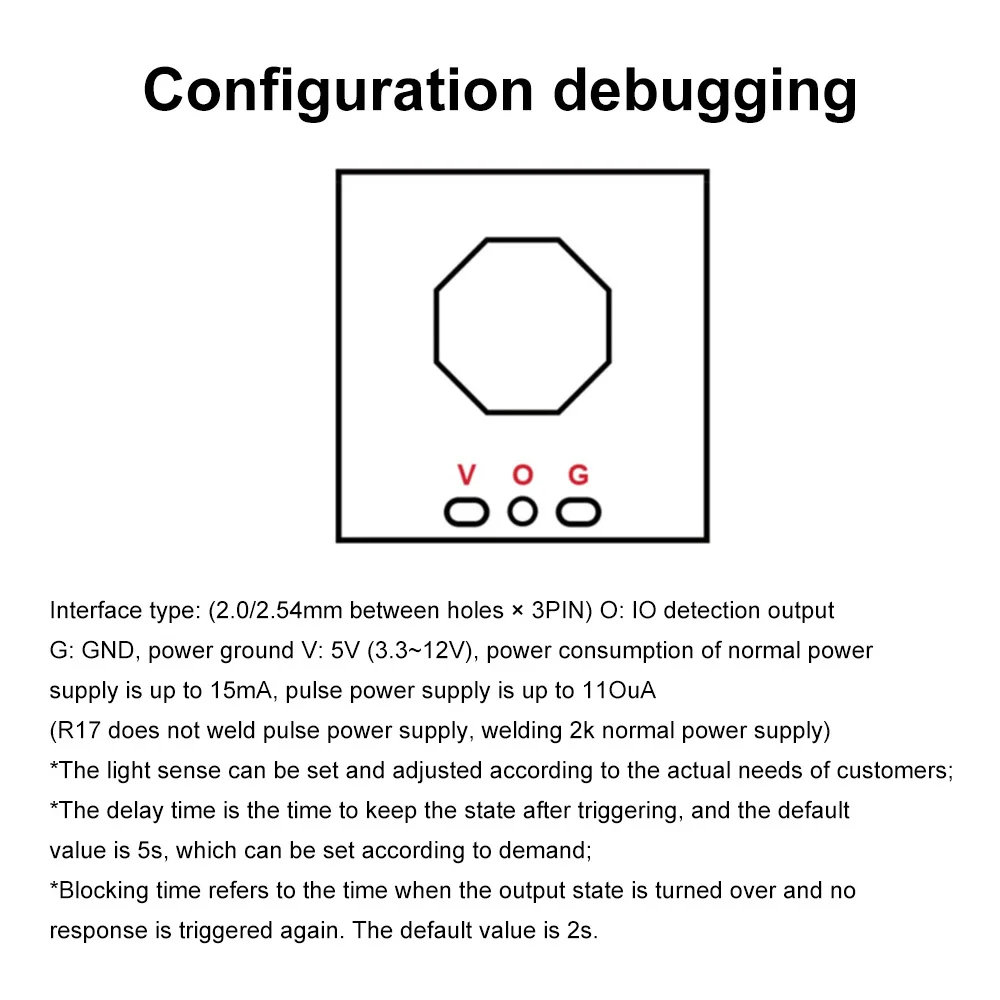
Operating Voltage: 3.3~12.0V
Operating Current: 16mA (Max, VCC=3.3~12.0V)
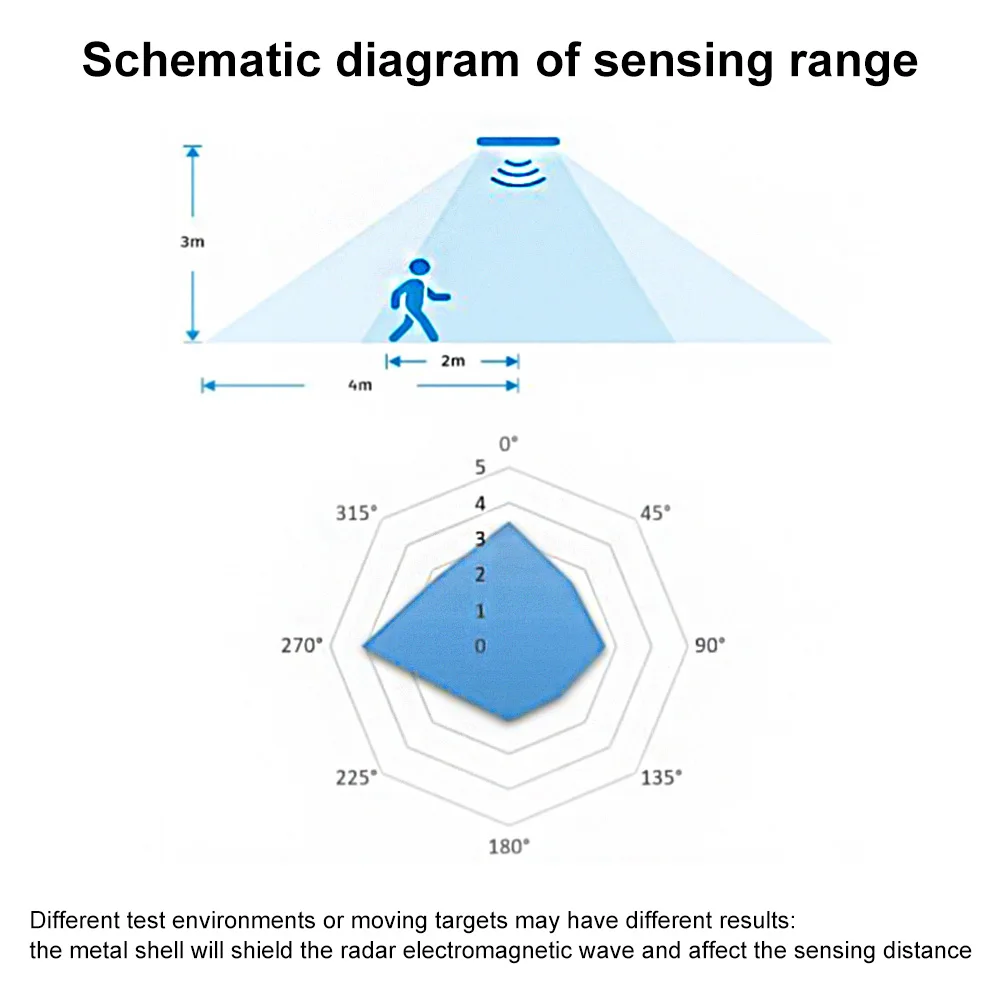
Detection Angle: Ceiling-mounted / 3dB Beam Width / 110°±10°
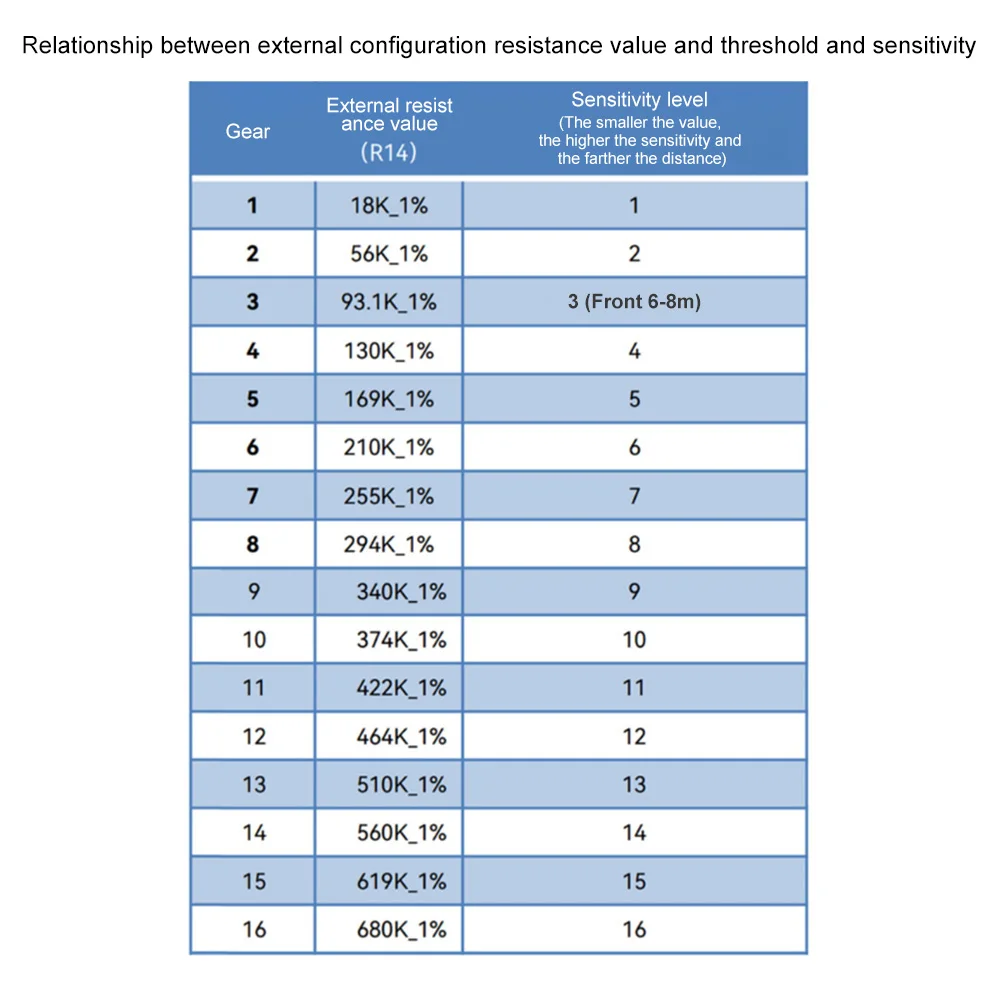
Sensing Distance: 2~8 meters (Mounted at 3m height)
Output Voltage: 3.3V (3.2~3.4V)
Power-up Stabilization Time: 15S (13~17S)
Operating Environment: Temperature 20°C~+70°C / Humidity 10~95%Rh
Blocking/Delay Time: 2S/5S (Typ.)
ESD Characteristics: Contact/Air Discharge 2KV (Typ.)
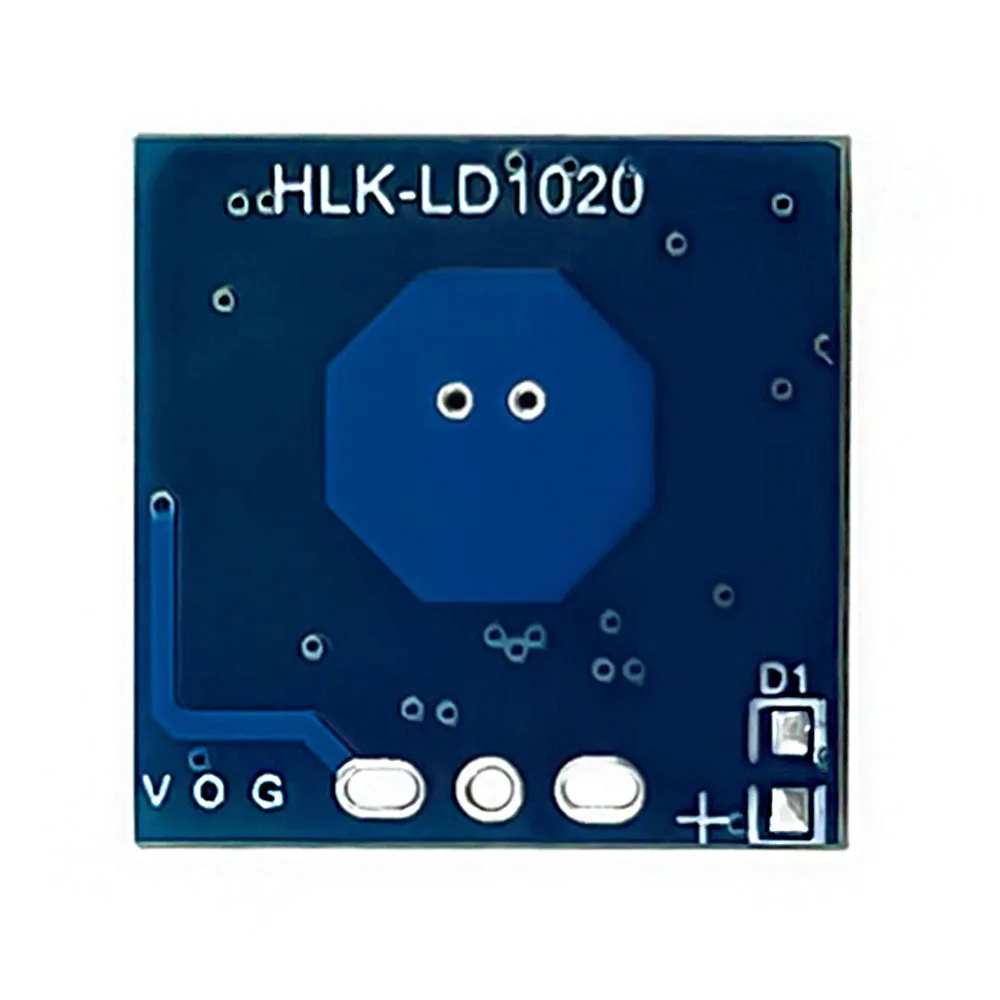
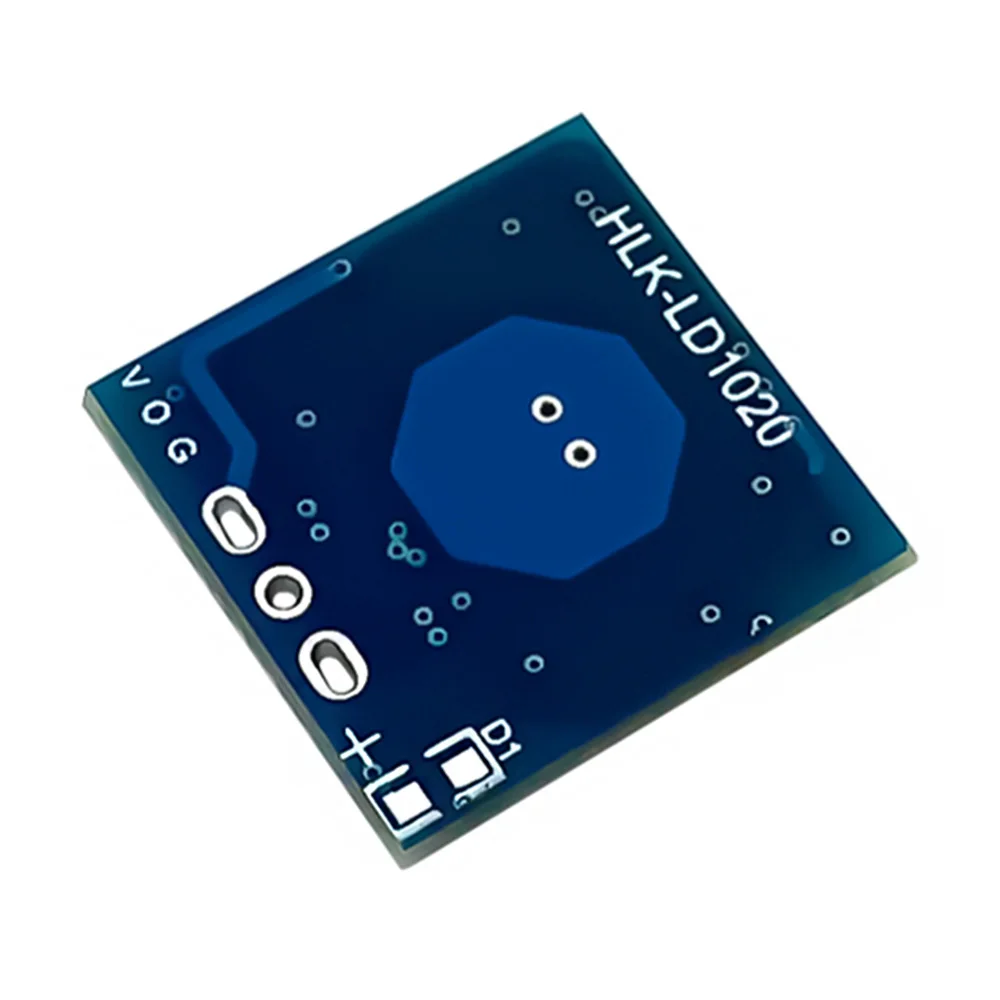
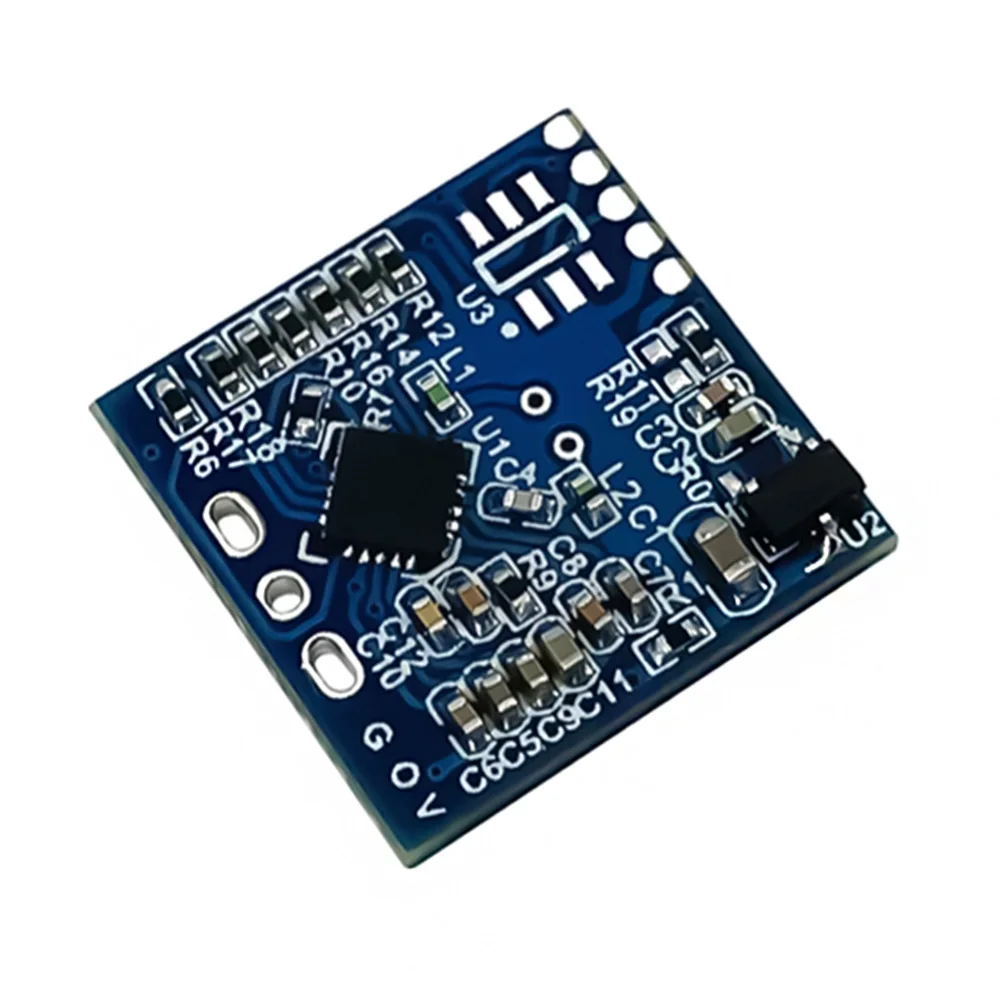
Dimensions: 15x15x2.4mm
Power Supply Design Considerations:
Ensure the power supply meets specifications for output voltage, current, and ripple coefficient. Unstable power supplies or excessive electromagnetic radiation may cause radar module false alarms, non-detection, or continuous self-activation.
The matching driver power supply should operate within 3.3~12V, with a drive current of no less than 1mA (or 100mA). Power supply ripple amplitude must be controlled within 100mV, and power frequency fluctuation amplitude should be minimal.
When assembling the driver power supply and radar module, avoid positioning the bottom or antenna surface of the radar module directly facing the driver power supply module. Additionally, keep it as far as possible from components within the driver power supply module that generate significant power frequency noise, such as rectifier bridges and switching transformers, to prevent interference with microwave signals.
to prevent interference with microwave signals.
Precautions:
Devices equipped with radar modules must be installed away from ventilation ducts, fire suppression pipes, drainage pipes, mechanical vibrations, or areas with large metal equipment causing intense vibrations, as these can impair radar reflection wave detection and sensing performance.
Never perform live electrical work to prevent operational errors, incorrect connections, circuit burnout, or electric shock.
Avoid installation in areas exposed to direct sunlight or rain to prevent damage and ensure longevity.
Devices must be installed away from electromagnetic fields to prevent false triggers caused by interference. Also avoid locations near fixed rotating or swinging objects (e.g., electric fans, swaying leaves, clothes drying in the wind) to prevent false alarms.
When installing multiple devices with built-in radar modules, ensure a minimum spacing of ≥0.5m between each device;
The radar module antenna surface should be positioned 3–5mm from the product housing to maintain optimal sensing distance;
After installing the built-in radar module, place the device horizontally or vertically within the effective sensing range. Avoid installing two or more devices with built-in radar modules facing each other directly;
Avoid placing devices with built-in radar modules (e.g., lighting fixtures) near other light sources (e.g., emergency lights, directional lights, etc.) that may cause interference. This prevents the device’s built-in light sensor (if present) from malfunctioning, which could lead to abnormal operation (e.g., constant off state, mistakenly detecting daytime conditions).
If a device with an embedded radar module (e.g., a light fixture) remains constantly active (always on) and fails to activate or deactivate based on motion detection, the radar module may be experiencing mid-frequency interference. This interference causes the module to continuously detect motion within its sensing range. In this case, turn off the power supply, check whether the power board’s supply status is normal, and verify if the spatial distance of the module has changed.
If the above steps fail to resolve the issue, first disconnect power and observe the surroundings near the installation location to eliminate potential environmental interference factors. If the problem persists after restarting the power supply, consider replacing the device’s driver power board or the radar module for further verification.
Package Contents:
Radar Sensor Module*1